Bearing my soul in Transylvania
Before I ever saw a bear in Transylvania, I heard the dogs. They barked throughout the night, the sound echoing around the Carpathian hills. These dogs are seldom companions but play a vital role as guardians. Beyond them, in the dark forest, moved animals powerful enough to kill livestock, sometimes people. I had travelled in search of wildness. I had not expected it to sound like this.
There are landscapes that live in us long before we set foot upon them. For years, Transylvania haunted my imagination, vast forests where great predators still move beneath oak and beech, and lush, traditional wildflower meadows clicking and whirring with invertebrate life. It seemed one of Europe’s last strongholds of ecological integrity.
But wildness, I would learn, does not survive in isolation. It survives in negotiation. I had travelled with a photographer friend to photograph brown bears. Romania holds one of Europe’s largest populations of this keystone species, most concentrated in the Carpathian Mountains. I set off in search of bears. I returned thinking about coexistence.
Our journey north from Bucharest felt like a slap in the face – industrial estates ensnared with barbed wire, pylons, crumbling apartment blocks and abandoned ex-Soviet factories, sprawled along the city margins, on across flat plains, wetlands drained, a few sheep, goats and cows marooned on islands of meagre, sun-parched grazing. Lorries thundered along broken roads. Development pressed hard against the horizon. It would have been easy to see this as contrast – civilisation versus wilderness. The truth is more complex.
Gradually the land lifted into the vertiginous Carpathians. Forested slopes rose in green swathes. Villages appeared where hay was still cut by hand and horses pulled carts high with sweet meadow grasses. White storks stood sentinel in tiny fields watching for small mammals, reptiles and amphibians. Buzzards circled. The pastoral beauty and Saxon villages felt archetypal.
Yet this is no museum landscape. It is lived in, worked, and defended, but for how much longer? In these hills, livestock and predators share space. Bears, wolves and lynx move through the same valleys where livestock grazes. Dogs are crucial guardians. Sometimes they are killed, sometimes they too do the killing. It’s not unusual for unsuspecting walkers to be bitten by unsocialised large guard dogs – LGDs, that have been reared with sheep and goats and only respect their owners. Coexistence is real. But it is not romantic.
On the first afternoon we drove up dry, dusty and deeply rutted tracks high into the hills to a woodland hide. The heat intense, the forests brooding. Cattle grazed below us. The presence of their canine protectors spoke of tension. After strict instructions not to leave the hide for any reason, our guide placed food beyond the treeline and departed.
The forest sighed. Then opened. Wood pigeons fed on vast crops of fallen acorns in front of the hide.
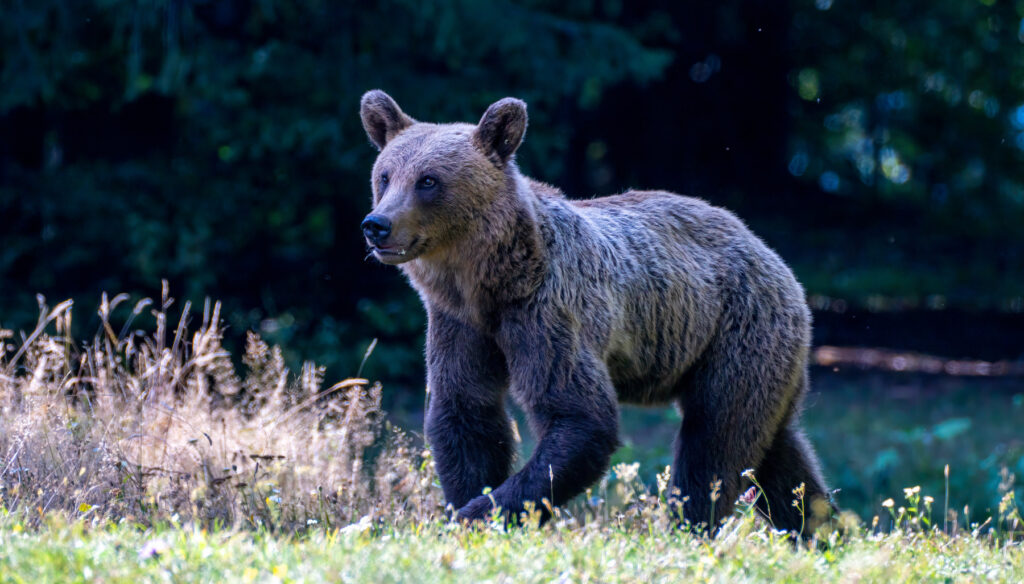
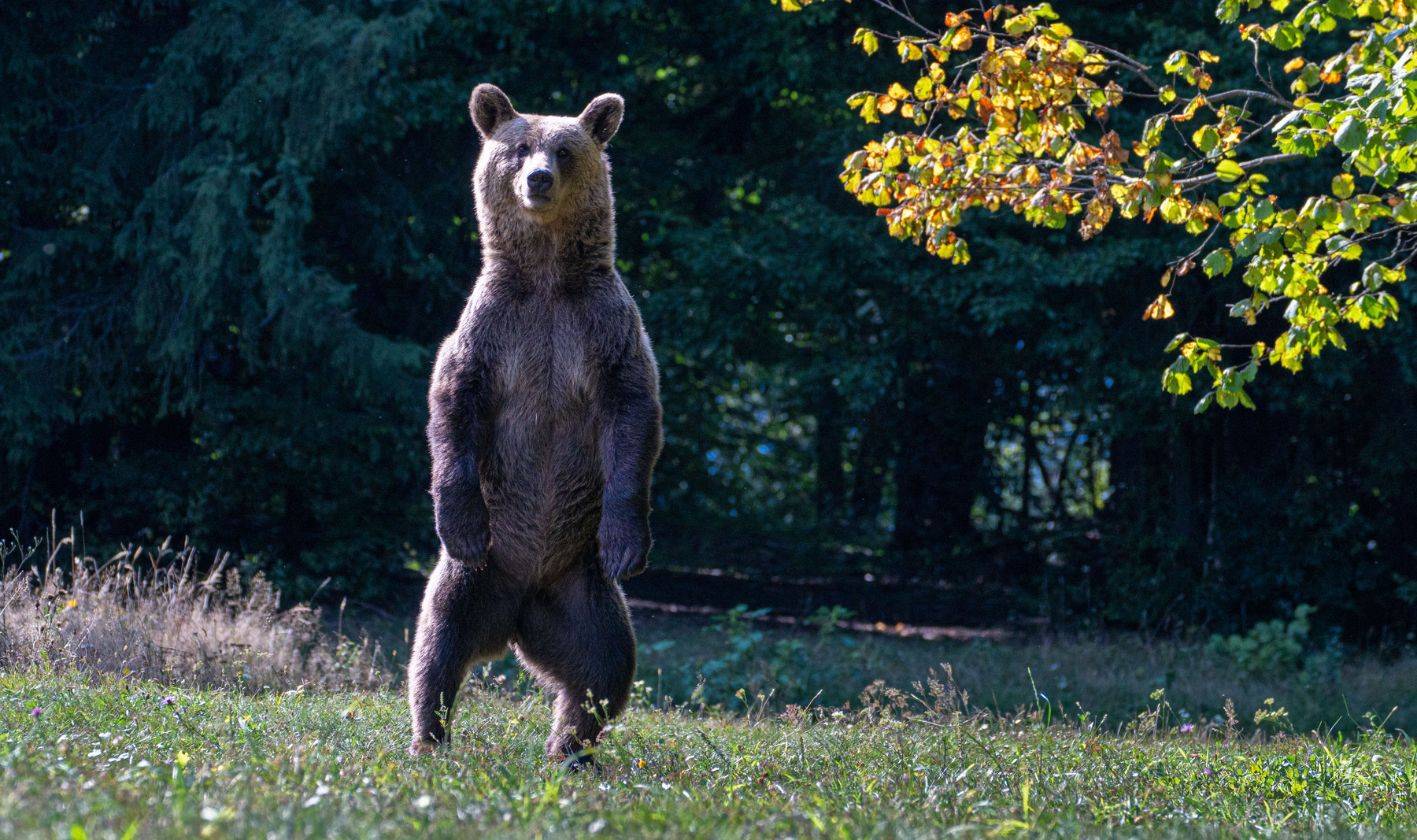
A young female brown bear emerged from the shadows. Her presence was visceral. She moved cautiously, sniffing the air with her large, muddied snout. The pigeons exploded, creating a clatter that startled her. She vanished. Then returned, warily rising on her hind legs, scanning the woodland, and looking directly towards the hide. We gasped.
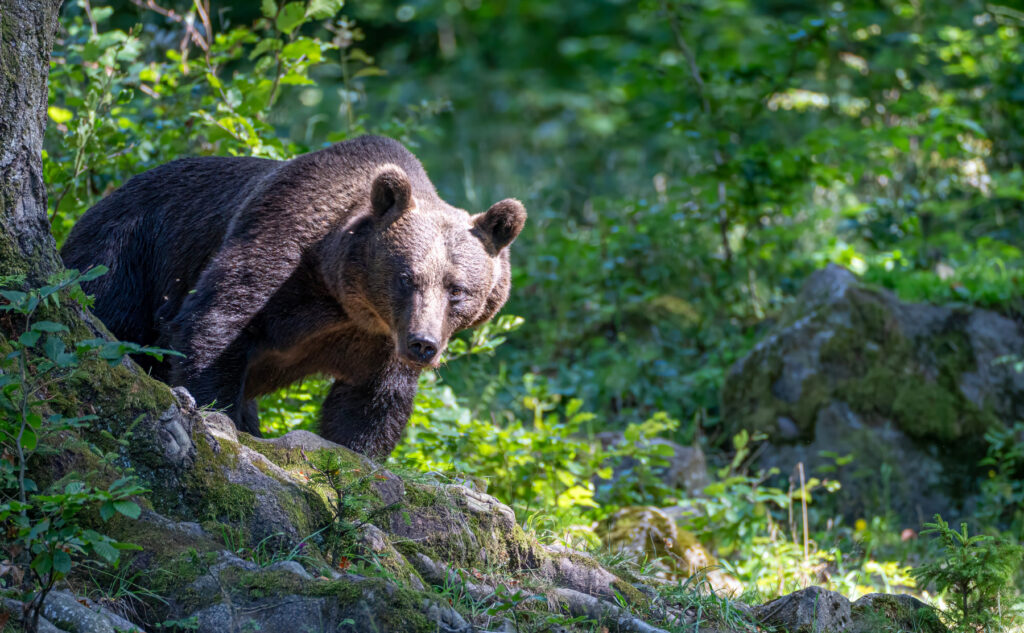
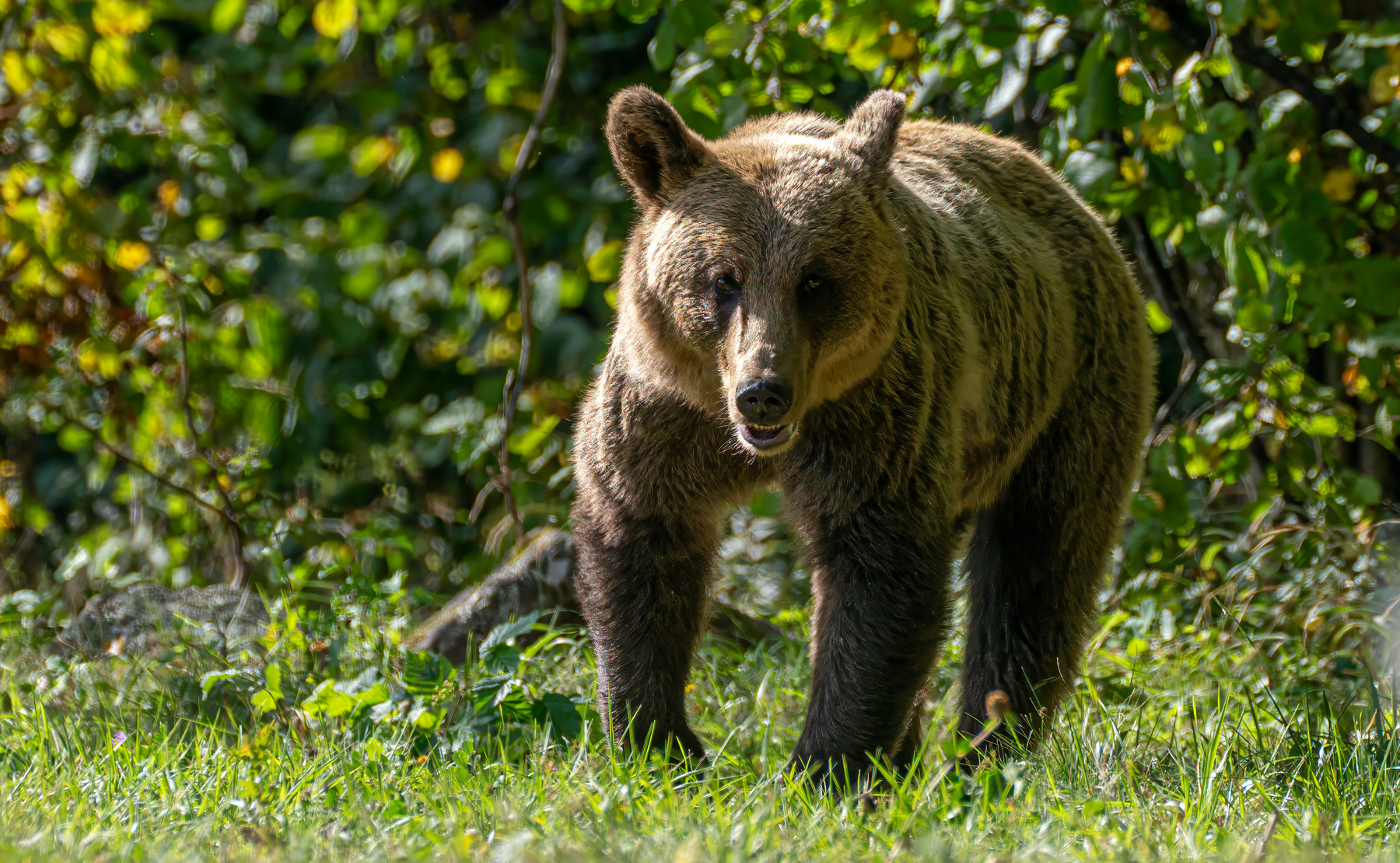
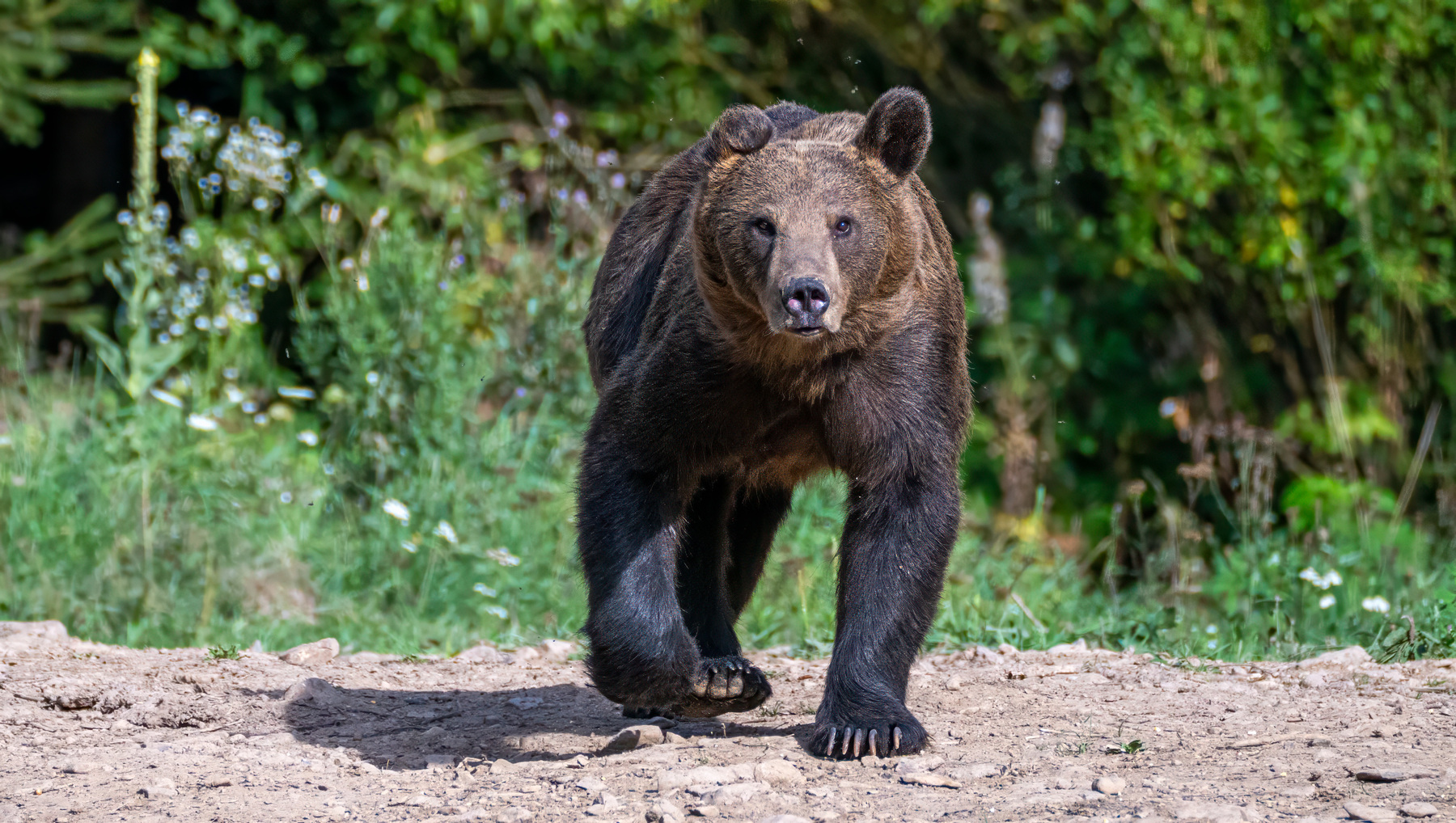
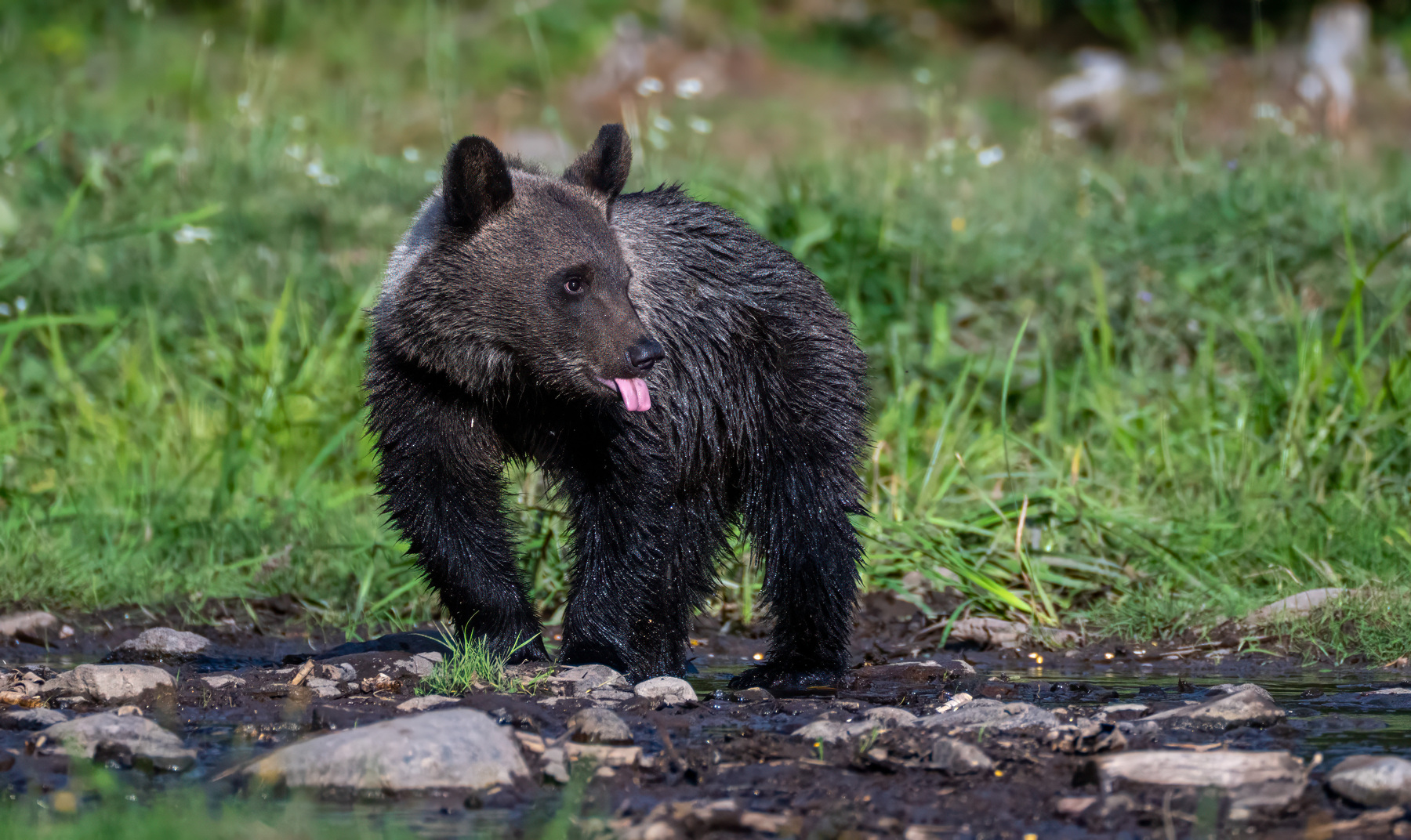
For three hours bears came and went. Some nervous, some confident, snuffling out the food left for them. A larger dominant female would appear, and yearlings retreated hastily before gingerly edging back. They passed so close we heard their breathing and low growls and saw the largesse of their paws and the curvature of claws created for butchery. In the hide the temperature rose on above 30 degrees.
Adrenaline flowed like a spate river. A sense of privilege and emotion engulfed me. In Scotland our largest predator is the badger, an animal we struggle to tolerate. Here, shepherds live alongside animals that regularly kill livestock. Or humans. I found myself thinking of my own flock of sheep and the hollow feeling of loss. It is easy to advocate for predators in abstraction. Harder when livelihood or feelings are at stake.
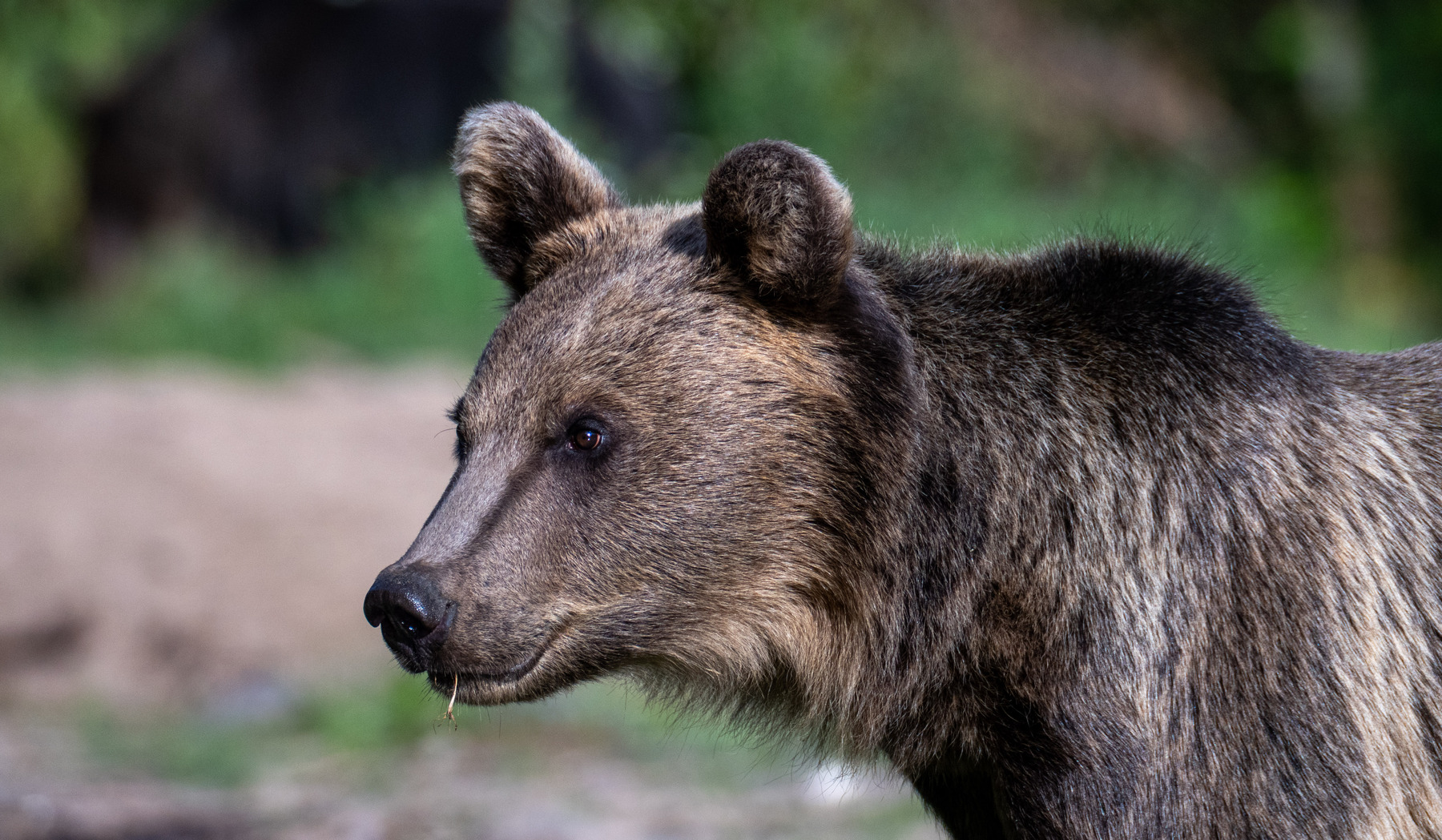
Romania’s bears play a vital ecological role: dispersing seeds, influencing prey behaviour, shaping sylvan dynamics. Their presence signals ecological resilience. Yet as bear populations recover across parts of Europe, so too does debate. Calls for culls grow louder. The balance between protection and management becomes politically charged.
There is a saying: feed a bear, kill a bear.
In some areas, bears are fed near roads for the tourists. Habituation follows. Bears that associate humans with food lose their natural wariness and venture into settlements. Some are shot. Others are killed by vehicles. The rise of social media has intensified crazy encounters, particularly when people approach mothers with cubs to risk that ridiculous selfie. And get between them. Disaster strikes. Who can blame a bear? On occasions, both bear and risk taker have become tragic victims.
Wildlife tourism, when responsibly managed, can foster understanding and bring economic value to rural communities. Sitting in that hide, watching bears move through dappled light, I felt the power of proximity. Awe has weight. It can change perception. But it is a fine line between reverence and exploitation. Should I have been there?
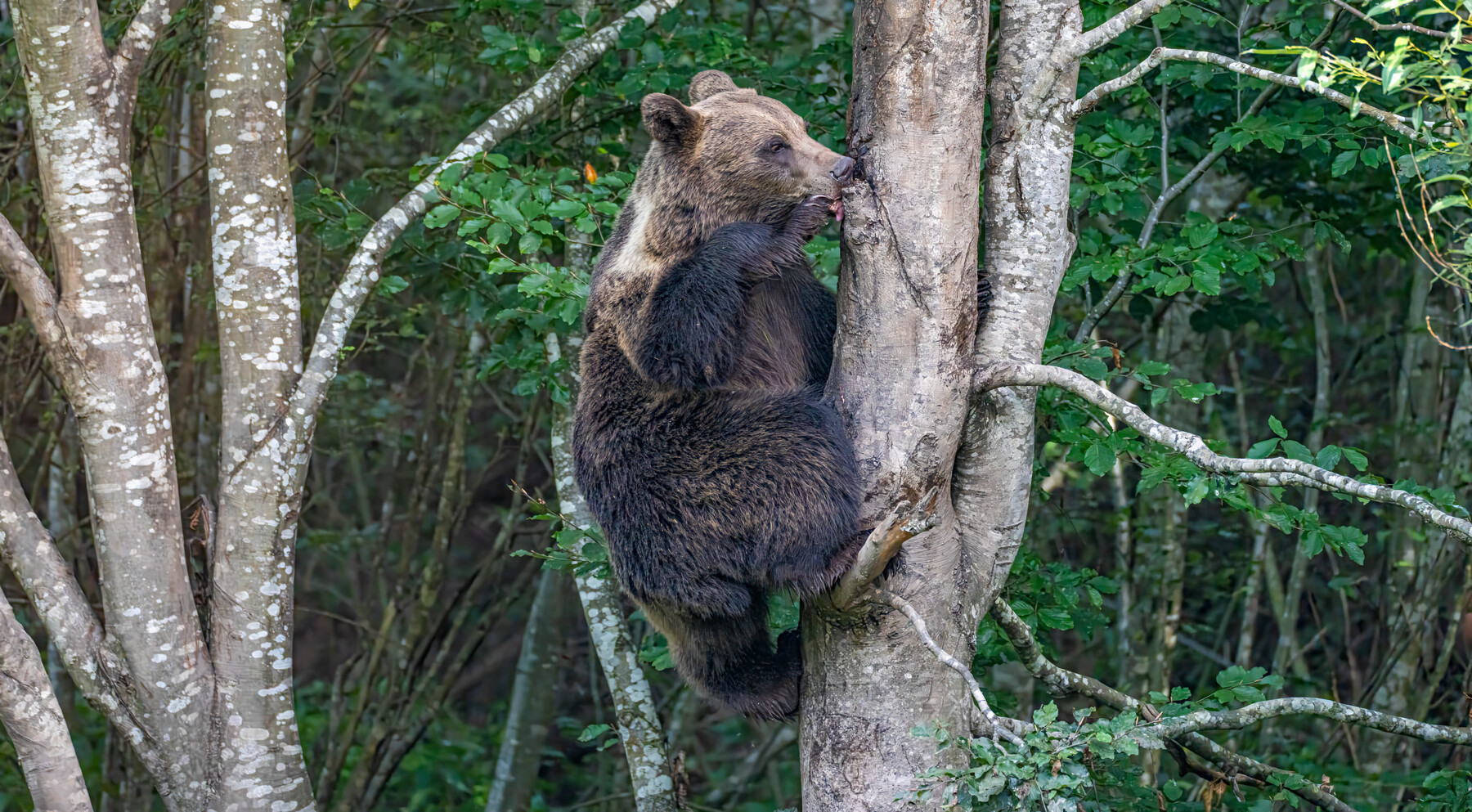
Over several days we watched bears from different hides. They bathed in ponds, climbed trees for sugary bait, postured and played, leaving me entranced. Each individual distinct. Imposing. Each magnificent. And always, beyond the treeline, sheep and cattle grazed.
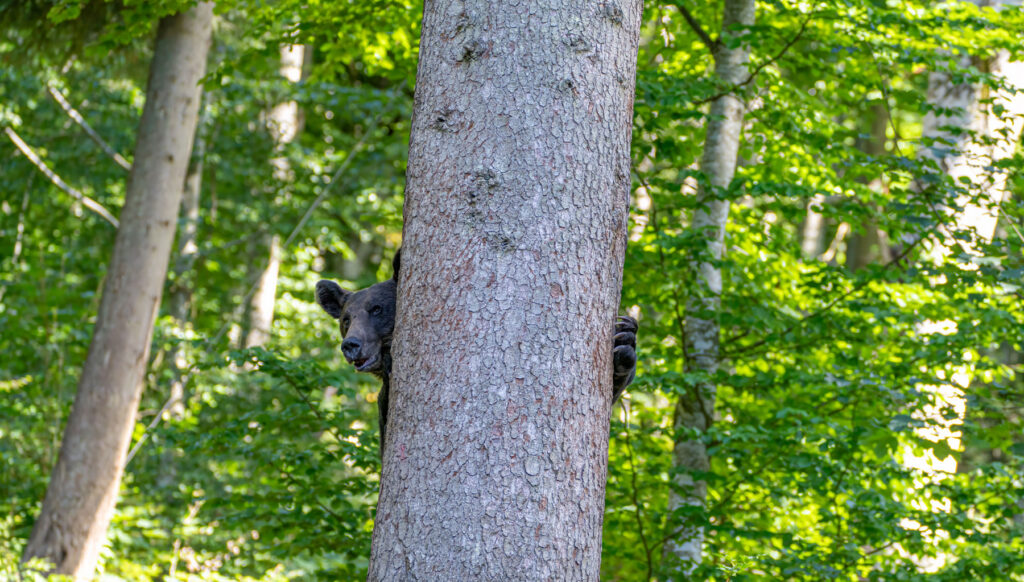
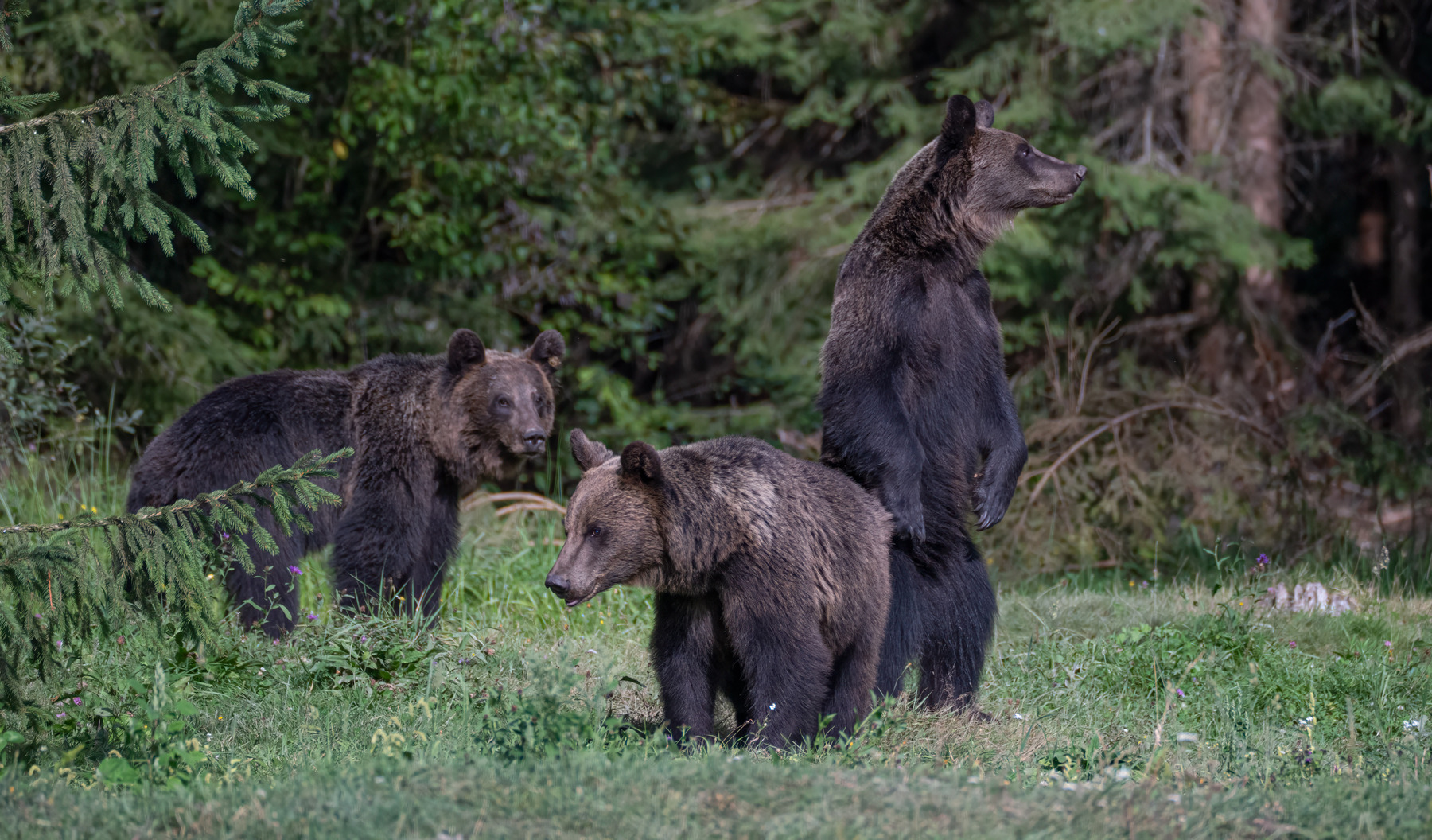
On the final afternoon, when we reached a particularly remote hide, noisily rattling and clanking our way up a vertiginous track in a souped-up red pick-up with massive tyres, and a different guide reeking of after shave who clearly viewed himself as a ‘babe magnet’, a bear was sitting in the sun speckled shadows waiting. The guide knew her well. He put out the food all around the wood while she watched, seemingly unperturbed. This hide was cool and for the first time the bears were not viewed behind special photography glass. Instead, camera lenses could be pushed through round openings. The guide left us with the usual instructions not to leave the hide at any price. A mother bear and her three cubs passed within yards. I heard their low growls and constant grunting communication. I inhaled their scent. The cubs jostled while she sought food eating noisily. To me she was not a management issue or a population statistic, but the truth was different. And she was conditioned to come to this site daily, conditioned to humans associating us with easy food. For a few suspended seconds my extraordinary intimate view obliterated my inner conflict. Was my presence here merely adding to the problem? But how do we inform and engage an increasingly nature-disconnected public without such encounters? My confusion left me with a sadness and a lump in my throat.
When I first imagined Transylvania, I pictured untouched wilderness. I know now that no such place exists. These forests and mountain meadows persist because people live within them, cutting hay, guarding flocks, negotiating loss, adapting traditions.
Wildness here is not separate from humanity. It exists alongside it.
As we left the forest for the final time, golden light filtering through beech trunks, I thought of how often we frame predators as problems to solve rather than relationships to manage. The bears had not disappointed. They were everything I had hoped – immense, intelligent, ecologically vital. But I was worried for them, for their future as more forests are logged, many illegally, and bears are pushed to villages – overflowing rubbish bins, hens, domestic pets, horses and ponies and us.
The future of Europe’s largest predators will not be determined by their ability to survive in forests. It will be determined by our willingness to share and respect them, to give them the space they need. And that, surely, is the greater challenge.