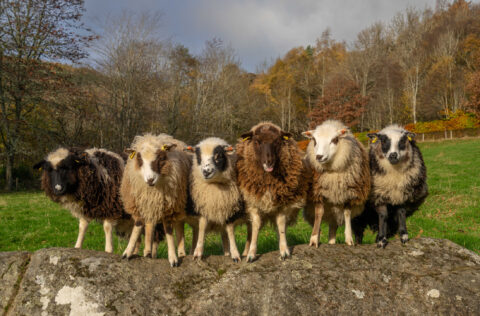
Video: In the Company of Sheep
A short video to accompany the publication of my new book, In the Company of Sheep.
naturalist – conservationist – writer – photographer – wildlife rehabilitator
A short video to accompany the publication of my new book, In the Company of Sheep.
Scotland Outdoors ›
In the Company of Sheep
Scotland Outdoors 12 August 2026
Mark Stephen meets naturalist and author Polly Pullar in the sheep shed of her farm in Perthshire. Polly’s latest book In The Company of Sheep describes her fascination with them.
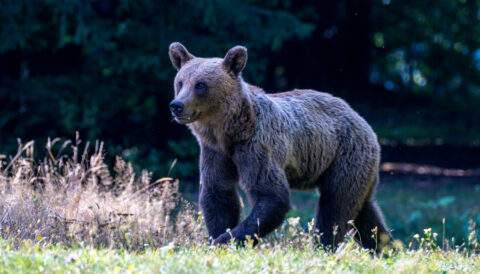
Before I ever saw a bear in Transylvania, I heard the dogs. They barked throughout the night, the sound echoing around the Carpathian hills. These dogs are seldom companions but play a vital role as guardians. Beyond them, in the dark forest, moved animals powerful enough to kill livestock, sometimes people. I had travelled in search of wildness. I had not expected it to sound like this.
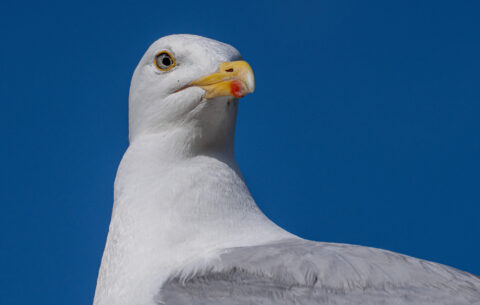
Before you start complaining about it, let me state, calmly and for the record, that the gull is innocent. Not innocent in the legal sense. No one who has made prolonged eye contact with a gull over a parcel of chips would argue that. But innocent in the broader, philosophical sense. The gull did not create this situation. The gull merely arrived, assessed it, and behaved accordingly. If anything, the gull is the most honest participant in the modern seaside town.
Continue reading “A Gullible Seaside Dispute”We are really looking forward to a very special programme of events this autumn in the West Highland Hotel to celebrate our 10th Anniversary. For further details visit: www.a-write-highland-hoolie.com
Polly has recently become an Ambassador for the Beaver Trust. Here she gives a short introduction, with the help of an energetic little red squirrel.
Find out more at the Beaver Trust website.

Troup Head – Scotland’s only mainland gannet colony: a pungent aroma of guano fills the air as I walk closer to life on the edges and ledges amid the gentle songs of skylarks. If eulogies are a celebration tribute, then there is no better bird to sing them. Rising higher and higher into a racing sky of bruised clouds, a duet carries over dancing barley fields. Salt-crisped flowers and feathery grasses sway to the music. Skylark song is joyous yet mournful, and like the gannet at the opposite end of the avian spectrum, this tiny bird is vulnerable. And in decline.
Continue reading “Solan Goose Summer”
There’s a single oak high on the flank of Ben Hiant, overlooking the Sound of Mull. I have known this resilient tree since my early childhood. It’s in a place I love very much. Massaged by the warmth of the Gulf Stream, battered by the wrath of the Atlantic and silhouetted by a thousand sunsets over the islands of Mull, Coll and Tiree, it is horizontal, its trunk fissured and colonised by tiny ferns. An oak sustains more life forms than any other native tree. Generally, we think of oaks as mighty: trees for building houses, boats or bastions; trees of grandiose parklands, their massive weighty boughs stretching to the heavens. The oaks of Scotland’s rainforest on the western sea board are different: diminutive, windsculpted. Many do not stay the course while others, like mine, grow strong and beautiful as they find succour between a rock and a hard place. Raven, hooded crow, buzzard and tawny owl frequently visit this tree. Sometimes it will be the little stonechat with his dapper black bonnet. And, from time to time, it is me, for its trunk, having withstood so much abuse, offers me support too, the horizontal oak, high on a hillside west of the sun.
Continue reading “The Horizontal Oak”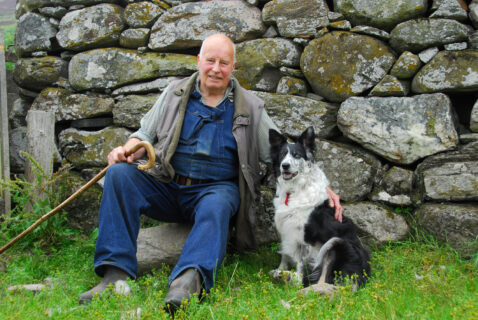
When my close friend Mervyn Knox Browne of South Loch Tayside was nearing the end of his long life, on a visit, I asked him how he was doing. Incapacitated by the vagaries of old age, he replied, ‘I am useless, just deadwood.’ It upset me to hear this from a man who had left his mark inspiring dozens of people, young and old, and whose 95 years had made a successful difference. He was a revered community member as well as a good deal further afield, and he had achieved so much more than he realised.
Continue reading “Dead Wood”
The death of Lawrence MacEwen of the tiny Hebridean island of Muck leaves a void as gaping as a crevasse. Muck has been in the MacEwen family since 1896. For the past 40 years, Lawrence and his wife Jenny and their family have kept this fertile island with its thriving livestock farm and ethos of self-sufficiency, afloat. As a result, Muck is held aloft as an example of a functioning remote rural community – progressive and innovative. ‘I believe in evolution, not revolution,’ Lawrence stated. His unique brand of benevolent paternalism was proof of its success.
Continue reading “Lawrence MacEwen Obituary”